


By Dee Dee McNeil
September 1, 2026
“I grew up when it was a time of rebellion. There was a culture that we grew up in at that particular time. We were changing our American names to African names and listening to Malcolm X speeches,” Wendell Harrison told me during a recent interview.
At the early age of fourteen, he was not only interested in politics, Wendell Harrison was already getting gigs at Motown playing his tenor saxophone. He was a part of the Choker Campbell Band. They were a Detroit live band that backed up popular working entertainers like Marvin Gaye and Aretha Franklin. That was before those artists became legendary. Harrison recalls being introduced to Stevie Wonder when the prodigy was just twelve years old.

“Everybody was talking about; he’s the next big thing! I was maybe seventeen years old. He was just a little kid, playing a bunch of instruments, and I was a kid too. But they were right. He turned out to be a monster!” Wendell Harrison recalled his early contact with Motown super stars.
It was not only Stevie Wonder who would become iconic, but most of those people Wendell Harrison was making music with would go on to become international legends. It was a time of great promise and incredible creativity in Detroit, Michigan.
“I could read music because music education in Detroit schools was happening back in the day. They started me on piano when I was five to keep me busy. I think it was a discipline thing. My mind was all over the place. Today, they’d call it ADHD. They felt like my mind was scattered. I couldn’t concentrate on nothing. So, the music seemed to help settle me down. I was a nervous kid. When I turned eight, my grandfather got me a clarinet. He said, this music thing seems to be working for this guy, and he knew I wasn’t crazy about piano. I took to the clarinet right away,” Harrison recalled his love of woodwind instruments.
“On my father’s side, he had a Ph.D. in Sociology. My mother, Ossalee Ida Punché, met my father at Prairie View University. My mother was a student in Professor Harrison’s class. He robbed the cradle,” Wendell Harrison chuckles when he tells me this story.
“My mother and father separated when I was born. He didn’t want to leave teaching at Southern University in Baton Rouge, Louisiana. He was bull-headed and my mother was just as stubborn. She was a Leo. They both had their own way of doing stuff. My father’s father was a preacher. My Auntie played piano and sang. Aunt Lula Mae Dixon had a Gospel radio broadcast. She was from Louisiana. Music was always in our family.
“My mother moved us to Detroit in the early 1940s with my maternal grandfather and grandmother. He sold his medical practice, and they bought property up there. She said my father was great, but he had his own life to live. They had two different mindsets. He wrote us letters and sent my mother money. She shared his letters with me.”
Although Wendell Harrison was surrounded by academia, he chose the less trodden path of music early in his life. He loved jazz and had big dreams of becoming a prominent jazz musician. By age fourteen, still in public school, he was picking up gigs backing up Motown artists. Singer, songwriter Morris Broadnax (who was one of Stevie Wonder’s mentors and co-wrote the big hit record “Until You Come Back To Me”) introduced him to his first band; the Choker Campbell Band.
“With Aretha, I worked on that video and hit record, “Freeway of Love.”
You know, as a jazz musician, I would also get calls from different people affiliated with Motown, because I could read music and solo. That’s how I got calls to work with Marvin Gaye, the Four Tops, The Miracles, and The Temptations. Not studio work so much, but on shows,” Wendell shared.
Wendell Harrison grew good strong roots in the music industry. While attending Northwestern High School, Harrison switched from clarinet to tenor saxophone. At Northwestern he met other like-minded, fledgling musicians like the now Charles McPherson, trumpeter Lonnie Hillyer, and the iconic drummer, Roy Brooks. Then, legendary pianist Barry Harris took Wendell under his wings. That tutelage would shape the rest of Wendell Harrison’s life.
“When I was studying with Barry, he was working with Cannonball (Adderly), Lee Morgan and Kenny Burrell. When you have a foundation like that, it digs really deep and dictates your career,” Wendell shared.
“At nineteen, I went to New York and started recording for Atlantic Records. I worked with Hank Crawford, Grant Green and Lloyd Price. One day, somebody said, Hey, back in Detroit Motown just blew up into a big company and Berry Gordy is the President. I said WHAT? They said James Jamerson was playing a mean electric bass. I said WHAT? Cause I knew James when he was playing an upright bass and sounded as good as Ray Brown or Oscar Pettiford.”
While Wendell Harrison was living in New York, playing his tenor saxophone and making jazz and blues music, Motown was making history. Being young, naïve, and inexperienced, Harrison soon came face to face with the seedy side of the world. The saxophonist became influenced by some very unsavory characters.
“I was with Hank Crawford for four and a half years. I cut four albums with Hank Crawford on the Atlantic Record label. In 1965 they released ‘Dig These Blues.’ In ’66 we cut ‘After Hours’, then ‘Mr. Blues’ in 1967.
“That same year we released ‘Double Cross.’ I stayed busy on the road and in the studio. Hank would hire these criminals. They knew how to play his stuff. They played his book and they were all from Memphis, but they were dope fiends. So, I was with these monsters as a young person. For months they were actually trying to get me to try drugs. I was bored to death playing the same music every day. Every night playing the same shit. We had a book of 20 to 30 tunes. After a couple of weeks, Hank would say, you got to memorize the stuff. It was only 30 tunes, and we were playing them every night. He wanted us to project emotions into the music. It wasn’t about the paper. It was about feelings. He wanted us to reach for those feelings. So, all the guys were very adaptable. But when we got these crooks in the band, these criminals in the band, I began to be influenced by heroin. My friend, trumpeter Marcus Belgrave, warned me not to get involved, but I was young and foolish. By the time I got back to New York, I was strung out. But I didn’t know it!”
In the Sixties, drugs were rampant in the jazz community. Many of our great and talented jazz musicians became addicted. Harrison had his own battle with addiction. Long story short, Wendell Harrison wound up returning to his Detroit roots from New York, addicted. With the help of his family and the musicians around him that loved him, he was convinced to go to California and get into the Synanon program to clean up his act. Even there, he found music and it helped to heal him. This was his first California connection.
“I met Esther Phillips at Synanon and Art Pepper. I recorded for Columbia Records during that time with an album created by Synanon titled “The Sounds of Synanon: The Synanon Choir – A Rock Jazz Contata – Prince of Peace.” I was playing on top of this orchestra and a 30-piece choir,” Wendell told me.
Lesson learned, his horn under his arm and feeling like a brand, new man, Wendell returned to Detroit in 1970. His friend, Marcus Belgrave got him a job teaching at Metro Arts and working with Executive Director, Amelita Mandingo.
A year after, Harrison released an album recorded with his good friend, trombonist Phil Ranelin. It was called, “An Evening With the Devil.” It was a project he put together under the group name of “Tribe.” It chronicled chapters of his young life, reflecting all he had been through in his first thirty years. It was political too, including spoken word blended seamlessly into their jazz arrangements. Lyrics and poetry of protest included views on abortion, police brutality and more. Sadly, many of these same things still plague Americans today. We continue to protest in 2026. This Harrison project also established his “Tribe” record label.

The genesis of the Tribe group was trombonist Phil Ranelin, (who would eventually relocate to Southern California and become another one of Harrison’s California connections), Marcus Belgrave, who had relocated to the Motor City, and sometimes Harold McKinney (pianist) joined them. They had Ike Daney playing drums, (he also played with the Miracles and The Four Tops), Marion Hayden (a fantastic, young, female double bass player) participated, and sometimes drummer George Davidson joined them. Janelle Lee was the vocalist on the early Tribe Album.
“When I came back from Synanon in California, I was clean as a whistle. I was teaching at Metro Arts. Then I married my first wife, who was a photographer and graphic artist. The guy living next door to my mother was a promoter who promoted gospel shows out of town. He found out I had moved back to Detroit, and he started producing jazz concerts. He showed me and my wife how to promote and how to market concerts by using a program booklet. Remember at church, those program books that sold ads? For my shows, we sold tickets in advance, and my neighbor showed us how to promote and market our jazz concerts with a program book.
“So, we were doing all these concerts and recording. Journalist, author and educator Herb Boyd looked at our program booklet that featured a lot of ads at that time. He said damn! This could be a magazine. You need to make a magazine out of this program and publish it. It would sell.
“Remember, I’m playing the saxophone, teaching at Metro Arts and running my new Tribe Record Label. Now, here he comes with another bright idea. But at that time, we had a lot of people that were interested in supporting us. So, my wife at that particular time, started studying magazine layouts. People started writing articles. We used the magazine as a reference for these young writers, a vehicle for them to be published. They could write for the magazine, use it as a reference, then start writing for the Michigan Chronicle or the Detroit News. It was like a base for them. A starting point. We would give them a little stipend from the ad money. We paid for articles and photos. That’s what advertising paid for, along with paying the musicians.
“That’s how our magazine “TRIBE” started. First, we produced it every four months. Then, it became available every two months; after a while, a monthly. Then, we got distributors, the ones who also distributed Ebony and Jet magazine. When we got that distribution, we got bigger ads. Then, ad agencies got involved. We were doing pretty good at that point, selling out of the back of my car, plus distributors meant I bought me another car,” Wendell traced the miraculous success of his Tribe Magazine achievement.
The magazine stayed afloat for the next eight years. Tribe record label continued to thrive. Then, Harrison had the bright idea to start The Clarinet Ensemble.
“You know, projects are like children. You can’t really keep up with them. The Clarinet Ensemble was put together, because I was always composing and writing arrangements for the clarinet bass line, contra bass, alto, regular B flat and E flat soprano, along with the rhythm section. We did a lot of touring.
“I used to tour with Eddie Harris. We did a recording called “The Battle of the Tenors.” It was a festival recording. At that time, The Munich label, Inja Records, picked up my group, (The Clarinet Ensemble), as well as Roy Brooks’ duet with Geri Allen. One release became the 1992 live album –‘Live in Concert: featuring my 18-piece Big Band and the Clarinet Ensemble.’ Then, there was a studio recording ‘Wendell Harrison and the Clarinet Ensemble: Rush & Hustle’ released in 1994 on Wenha Records. That’s the label my current wife (Pam) and I own.”
“That record I did with Eddie Harris also got a lot of play. ‘The Battle of the Tenors and Mama’s Lickin’ Stick.” That’s what I called my Clarinet Ensemble, ‘Mama’s Lickin’ Stick.’ The personnel on that “Rush & Hustle” album were me, Harold McKinney on piano, my wife Pamela Wise on piano, Greg Koltyck, Paul Onachuck, and Ken Hobenstreet, on clarinets.”
The Mama’s Lickin’ Stick Clarinet Ensemble also appeared without other accompaniment, strong and solidified as an entity that stands alone.
The players in the video above include Wendell Harrison, bass clarinet ensemble, Deborah Scales, alto clarinet, Lorenzo Macuja, B-flat clarinet, Josh Pittman, B-flat clarinet
Pamela Wise, Wendell’s current wife is a recording artist, a composer and pianist, talented in her own right. Wise specializes in Latin Jazz and has several album releases.
Wendell Harrison was awarded the title, “Jazz Master” in the 1990s by Arts Midwest. They are a regional organization supporting artists in the Midwestern United States and closely affiliated with the National Endowment for the Arts. Harrison promptly formed The Michigan Jazz Masters group in 1995. They toured throughout the USA, the Middle East and Africa.
In 2018, Harrison received the prestigious Kresge Award and was gifted with $50,000. In 2021, he won the coveted Jazz Journalist Award and a string of other awards followed.
Recently, he made another California connection. He recorded live at the Detroit Institute of Arts on July 20, 2025. That album is “A Tribute to Pharoah Sanders” that captures Detroit reed master Wendell Harrison and his ensemble, TRIBE, in a transcendent performance honoring Harrison’s longtime friend and fellow jazz icon. The concert was part of Detroit’s Concert of Colors festival and later was broadcast on PBS. Harrison is channeling Sanders’ spirit using deep tenor cries, hypnotic grooves, and Afro-spiritual improvisation. Surprisingly, this recording became another California connection.
“Well, I’ve been doing a Pharoah Sanders tribute which is a release that we have out currently. We’re planning a tour in Europe coming up in the fall. ORG record label in California picked it up first, then a Japanese label, P-VINE, picked it up for Asian distribution.

Harrison’s “Tribe” group, record label and magazine are historic now. I remember attending his sold-out concert with Phil Ranelin featuring the TRIBE group. Southern California’s own Merle Kreibich produced the show. After all these years, the TRIBE record label is still alive and well, even being “sampled” by some of music’s young lions.

Next month, Oct 1st. Wendell Harrison will celebrate 84 years on this planet. He’s still playing his horns and chasing new dreams. Harrison continues composing, arranging, recording, educating, and is quick to tribute those dear friends who have left their musical impressions planted on the hillsides of history. Harrison is an inspiration, and one of our living legends in the jazz community.
* * * * * * * * * * *
By Dee Dee McNeil

Honey Cone – 2024
Honey Cone is a popular, nostalgic, R&B girl’s group that Shelly Clark originally founded with Edna Wright (the sister of historic singer Darlene Love), and Carolyn Willis. This occurred in 1968. They became famous for their #1 Billboard Hot 100 single, “Want Ads.”
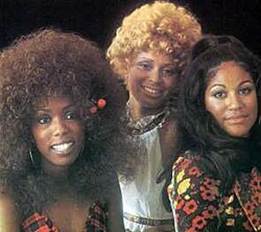
HONEY CONE – The original group: Carolyn Willis, Edna Wright & Shelly Clark
Recently, I chatted with original member and co-founder, Shelly Clark, who, in the last few years, has reimagined the Honey Cone group with new members Kathy Merrick and Wendy Smith-Bruné.
Shelly Clark is a native of Brooklyn, New York. Born July 27th. She started her singing career at the young age of six. She and her older brother Ilya Clark (also credited as Elia Clark) performed as The Clark Kids. They were tutored in the entertainment business by their mom and dad.
At the age of seven, young Shelly appeared in the hit Broadway musical “House of Flowers.” As a super talented child actress, singer and dancer, she was working with two legends: Pearl Bailey and Diahann Carroll who starred in that show.
“I think I was six when we auditioned for the House of Flowers Broadway show. I might have been seven, seven or eight when it started running on Broadway. First, we went for a casting call. That’s when we discovered they wanted two boys. So, my father said, you guys can out-dance and out-sing everybody who’s at this audition.
“My father was surprised when they said they wanted two boys. As soon as they announced that, he told me, well, come on Shelly. To my shock, he took me into the bathroom and cut all my hair off. It was down to my waist. My father was gangster. He was like, we’re not missing this show opportunity because of your hair. Oh, I was so upset. But he had to make me look like my brother, a boy, and we got the part. My father was a Joe Jackson type of personality, without all the abuse. But he was strict,” Shelly Clark shared this precious story with me.
I asked her what it was like working with Pearl Bailey and Dianne Carroll, through the eyes of a child.
“Well, at that young age, we were told that they were great performers. We used to stand in the wings and watch them perform. I have a very great respect for both of them. They were pretty and sang well, but neither was the girl who was tearing up the world during that time. We had a Beyoncé in the fifties. Her name was Sally Blair. I performed with Sallie when I toured with Cab Calloway. This was before Tina Turner and before Beyoncé. Sallie was a hellion. She would kick her shoes off and leave the crowd breathless. She was the female artist who really got my attention as a child. I was nine when I toured with Cab Calloway.
“Anyway, we got a recording studio session because the people from Columbia Records came to see me and my brother in that Broadway hit musical play. Once they saw us, they approached the producers of the play. They said, ‘We want those kids for an album that we’re doing. It’s going to be marketed to all the schools and all over New York’,” Shelly recalled how they recorded “Calypso songs for Children” in 1957 for Columbia Records.
“Well, at first the Broadway Producers told the Columbia Records people, ‘No! We can’t afford to lose them. They perform on stage every night. We need them there.’
“Next, I heard the record producer say, ‘Well, what if we knock it out over the weekend?’ I remember I looked at my father with wide eyes and said, sixteen songs over a weekend?”
Even as a child, Shelly knew what work it would take to learn and record that many new songs in two days.
“My father replied without blinking an eye, ‘Come on, we’re going to do it!’”
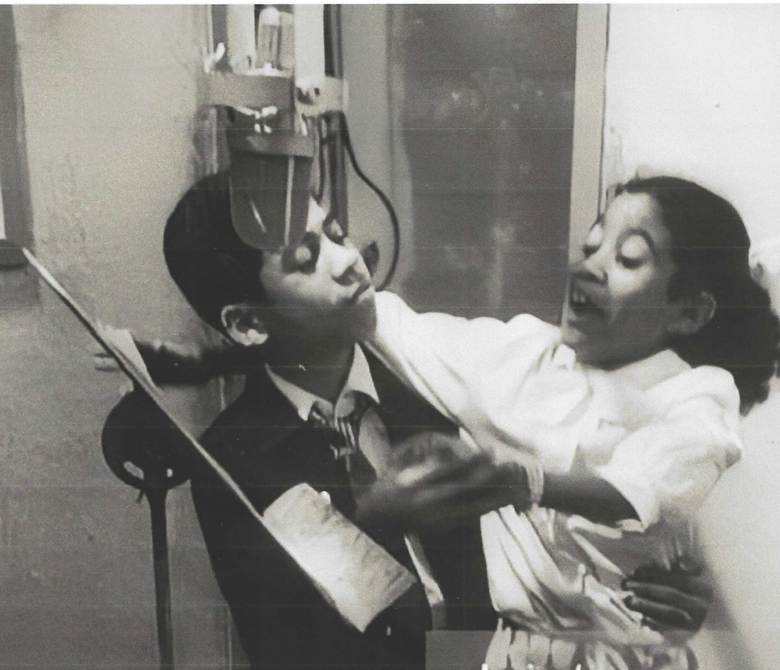
Ilya Clark and Shelly Clark (The Clark Kids) recording in the studio.
So, that’s how they recorded and released that Columbia Calypso Record. Then the child stars, The Clark Kids went right back to work on Broadway.
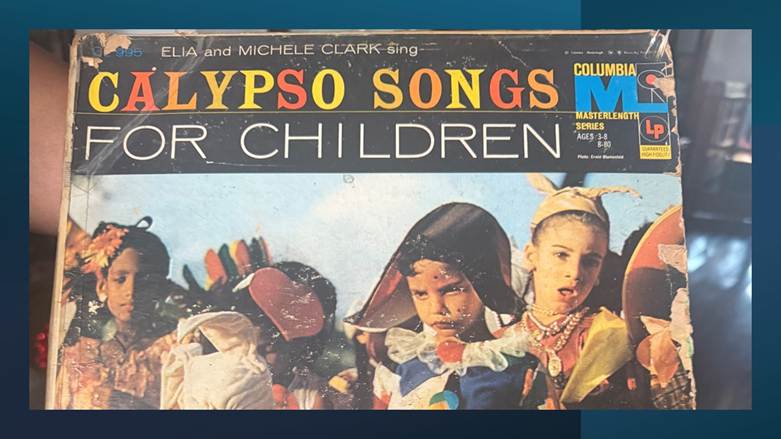
I’m sure that Columbia record was inspired by Harry Belafonte, who attained international success with his debut “Calypso” gold record album in 1956 and again in 1957. His popular album called, “Belafonte Sings of the Caribbean” introduced Americans to Calypso music, especially Belafonte’s hit song, “Banana Boat (Day-O).” Columbia Records wanted to ride that wave of success with a children’s calypso album. Within that same time frame, Shelly Clark’s family moved to Los Angeles.
Singing was always a bright star twinkling in Shelly Clark’s life. She was hired by several recording artists and touring artists to add her powerful vocals and dancing abilities to their records or ‘live’ shows. Clark worked with Tom Jones, R&B singer DJ Rogers, and UK star Richard Harris. She even dazzled audiences when she toured with Cab Calloway’s road show as a part of his Cotton Club Review. She was the youngest entertainer in that cast to perform at the Palace Theater and the famed Apollo Theater in New York City. Calloway’s Cotton Club Review show extended to a 7-month national tour.
How amazing that a tiny, talented, nine-year-old girl named Shelly Clark became part of Cab Calloway’s entourage. I asked shelly if her father accompanied her on the Cab Calloway tour?
“My father and mother would take turns. I guess you’ve heard those stories, that when we went down South, I couldn’t stay in the White hotels with my mother?” Shelly asked.
I knew Shelly Clark’s father was from Barbados and her mother was a Jewish Russian. I also knew that in the 1950s, racism was prevalent in the United States and interracial marriage was illegal in many States.
“All the blacks had to stay in black designated hotels. My mother couldn’t stay in those hotels with me. They actually had to sneak me in to see her. God bless those chorus girls. They were my interim mothers. They had to be my mother-figures, because somebody had to take care of me. They’d put a blanket over me in the trunk, to go visit my mother. Because anybody caught being black and white together, that meant some jail time. America’s still got a lot of issues,” Shelly spoke solemnly.
I can’t imagine how emotional that time must have been in Shelly’s young life. Remember, she was only nine years old. The talented little lady lived and worked through a challenging time in the history of our country.
Shelly (born Mashelle Clark) had a talented Jewish mother, Lilly Gainen-Clark, who was also a concert pianist. Her father, Edward Evans Clark, was a heralded dancer, singer and entertainer himself. Notably, artistry was simply in Shelly’s DNA.
The years marched forward. At one point in her career, Shelly auditioned and became part of the Ikette background singers and dancers. This resulted in touring with the Ike & Tina Turner Revue. That gig ended when the tour bus she was riding in rolled over three times on the highway. Sadly, their driver had fallen asleep that icy cold winter night. Shelly was badly injured during that horrific bus accident.
“Yeah, I was on the road with Ike and Tina turner for about six months when the tour bus turned over. We were in Kansas in the dead of winter. One of the Earth Wind and Fire guys, their lead guitarist, Al McKay, who wrote that hit song, September, he was the one who discovered me in the snow. Evidently, I was the only one who fell out of the bus. We rolled over three times. We wound up on sort of an embankment. The driver had fallen asleep at the wheel. I was either thrown out a door or a window. Something opened and I flew out of that bus. Then Al McKay came looking. He was shouting my name, ‘Shelly, Shelly, where are you?’ I was 100 feet from the bus, in a deep snow drift. He dug me out and I still remember that my head hurt so badly. At that time, I didn’t know my head was busted wide open. Al took his jacket off and stuck it under my bloody head. To this day, I wonder how he called an ambulance. We didn’t have cell phones back in those days. Could there have been a phone booth nearby? A phone box on the freeway? A neighborhood store? I don’t know!
“We were on the freeway is all I remember. But somehow the ambulance came and they took me to the hospital. Surprisingly, my mother found me, with no internet; nothing! If anybody can find you, it’s a mother looking for her child.
“I remember Tina Turner came to the hospital to see me. I heard her tell the doctors, don’t give her a mirror. I thought to myself, oh, oh! I must be really messed up. I didn’t know how bad it was. They wouldn’t let me look at my face. Two weeks later they released me and I hobbled home. Then I had to heal up pretty quickly, because I had bills to pay. That’s when I took the gig to work with Little Richard,” the resilient singer told me.
An unexpected big break came into Shelly’s life after she began singing with Edna Wright and Carolyn Willis. Wright’s Sister (Darlene Love, popular for working years with Phil Spector) was scheduled to sing on a celebrated 1968 television variety show that was hosted by Andy Williams. When Darlene couldn’t make it, she called her sister, Edna Wright, to fill in for her. Edna, in turn, telephoned Carolyn Willis and Shelly Clark, asking them to join her. They had a tight, beautiful, harmonic sound. Already singing together professionally as a group, the girls were quite prepared for this unexpected television debut.
Always thinking ahead, Wright contacted Eddie Holland. The famous writing and producing trio of Holland, Dozier, Holland who had recently left Motown Records. Edna knew they had formed Hot Wax Records, and she wanted a record deal for her girl’s group. Wright asked the three famous songwriters/producers to watch the Andy Williams show and check out their singing group. The rest is history.
Once signed to Hot Wax Records, it was Eddie Holland who came up with the name Honey Cone. He named the girls after his favorite ice cream flavor. Why not? They were cool, sweet and sounded delicious. At first, the girls weren’t crazy about the name. But Eddie was sure the name was ear catching and complimentary. It was a name he was certain would become familiar on the lips of the public. He was right.
“At first, we challenged Eddie Holland. We didn’t like the name. We didn’t understand what Honey Cone was about. Once we discovered he had a sentimental memory of a dessert he enjoyed when he was three, four and five years old, an ice cream, then we warmed up to the name,” Shelly recalled.
Although based in Los Angeles, the Honey Cone group recorded in Detroit. Those first recorded songs were written by General Johnson and Edna Wright’s boyfriend, Greg Perry. Greg was also a piano player for the Holland Dozier Holland team during that time.
Honey Cone recorded and released their first single from the newly established Hot Wax Records label. It was titled “While You’re Out Looking for Sugar” and was written by R. Dunbar and E. Wayne. It peaked at #26 on the Billboard 100 Chart and had that recognizable Motown sound.
It was followed by “Girls, it Ain’t Easy” that soared up to #8 on the same impressive Billboard chart. Honey Cone started making a name for themselves. Their tight, creative harmonies propped up the background for Edna’s strong lead singing.
Holland, Dozier, Holland believed in those three strong singers. They put everything behind the Honey Cone group. It paid off. Their fifth single release shook the world with catchy lyrics, a tight dance groove, and the smooth soulful harmonies of Shelly Clark, Wright and Willis. “Want Ads” became their biggest success. It smashed to the top of the R&B charts, but it also climbed the Pop Charts. We call that “cross-over” success, when black artists have their music played on both black radio stations and white pop stations.
In 1971, Honey Cone sold over one million copies of that wonderful song and stamped their name all over America, as well as overseas. They toured the world. Everyone was singing “Want Ads,” composed by Greg Perry, General Norman Johnson and Barney Perkins. An extended dance version appeared on their third album “Soulful Tapestry.”
At the prime of their success, several things happened that challenged Honey Cone’s rising stardom. First, Carolyn Willis became unhappy with the song material being written for them. She decided to leave the group in 1973. Then, Hot Wax Records found themselves in serious debt. Sadly, they had to close their doors in 1973. After three years of trying to raise funds to revive the fledgling label, they tried using their lucky charm, the Honey Cone group, to reestablish their company in 1976. But the company was doomed.
After the death of Wright in 2020, Shelly Clark decided to revive the Honey Cone group. It was a project that had been rolling around in her head for several years. I asked Clark how she found the new girls in the group.
“Honestly, first I prayed. I asked Verdine, doesn’t your drummer, John Paris, have a wife who sings? He said yes. As a matter of fact, she’s out of the country with a group right now. They’re doing a show called, The Sounds of the Supremes. It was a group run by Karen Raglin. They traveled around the world as a tribute act. I had a birthday dinner coming up. So, I said to my husband, Verdine, ‘Let’s invite Kathy Merrick to my dinner. I can ask her in person if she’d be interested.’ She was the first one I contacted,” Shelly Clark explained.
Turns out, Kathy was receptive to the idea of becoming a part of Honey Cone.
“After that, I asked Kathy if she could find a third girl? She said, ‘yes, I can.’ Our first choice was Wendy Smith-Bruné. She and Kathy had traded jobs all through life. When Kathy was pregnant, Wendy would sub for her. When Wendy was pregnant, Kathy would sub in her place. So, they would go back and forth, touring with different people. We thought that Wendy would be the best choice,” Shelly told me.
In 2024, the newly formed Honey Cone group released their first single in fifty years. It was titled, “Here Comes the Rain Again” (a ‘cover’ of the Eurythmic’s 1984 hit song). Each of these women, Shelly Clark, Kathy Merrick and Wendy Smith-Bruné have a powerhouse lead vocal voice. All are competent background singers. Wendy also plays professional flute. Together, their harmonics are satin smooth and inviting. The new Honey Cone is sweet and smokin’ hot!
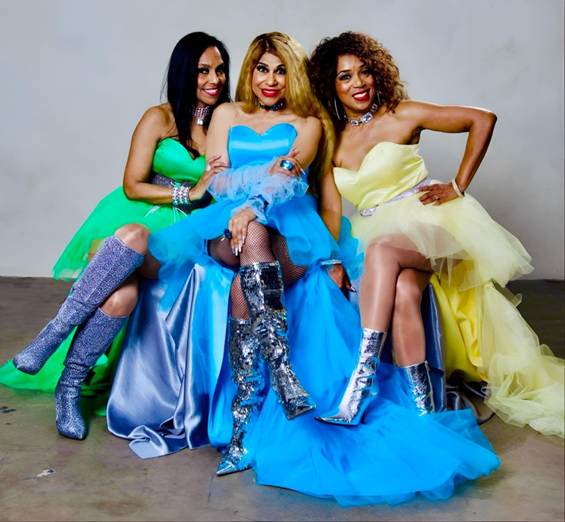
2026 Honey Cone group
Forty-seven years ago, on New Year’s Eve, Shelly Clark married Verdine White, the bassist and one of the founding members of Earth Wind and Fire. Today, White is celebrated by Rolling Stone magazine as one of the 50 Greatest Bassists of All Time. Born July 25, 1951, his birthday falls just two days prior to Shelly Clark’s birthday. I asked her how two Leo personalities make a marriage work for 47-years?
“Honey, lots of applause!” Shelly laughs out loud and I laugh with her.
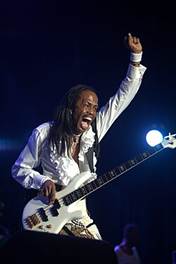
Verdine White’s constant love and support of his wife have propelled her music forward. He is very involved in the production of the new Honey Cone group.
“The girls and I got together and we said, let’s check our blend out. It was good! We got John Paris (the drummer with Earth Wind & Fire) involved and my husband Verdine. They produced our first single release in fifty years along with Neal H. Pouge. We started putting a show together. Our first concert was at The Mint in Los Angeles. On August 14,2026 we will be performing at Catalina Bar and Grill on Sunset Boulevard.”
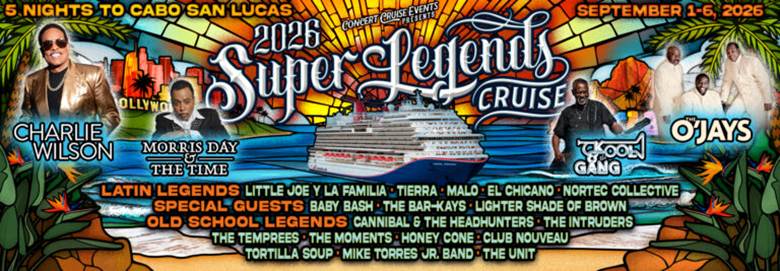
From September 1 to September 6 Honey Cone is a part of the Super Legend concert at sea. It’s been voted The Top 5 Music Cruise by U.S. News. Folks will set sail for Cabo San Lucas, entertained by an All-Star line-up of incredible artists including Charlie Wilson, The O’Jays, Kool & the Gang, Morris Day & The Time. Honey Cone is appearing with The Temprees, Cannibal & the Headhunters, The Intruders, The Moments, Club Nouveau, Tortilla Soup, Mike Torres Jr. Band and many, many more.
Shelly Clark knows the music business from worldwide stages to the executive offices of the music business. She proudly established W&W Management Company that represents celebrities. Behind the scenes, she has successfully worked as a production coordinator and casting director for Eddie Murphy Television. Add this knowledge to her over six decades of experience as a recording artist, a feature act, and a touring artist who also sings background and dances, as well as being a strong lead singer, well, that creates a woman with amazing knowledge of the music business in its entirety.
Shelly, along with Edna Wright, was honored when (HAL), the Heroes and Legends Award in Music, celebrated Honey Cone. In January of 2021, Honey Cone was inducted into the Soul Music Hall of Fame, Class of 2020. Other honors of distinction include the 2016 National Rhythm and Blues Music Society’s Unsung Heroine Award and of course their two RIAA Certifications that celebrated Gold Records for “Want Ads” selling one million units, as well as for “Stick Up” that also sold a million copies.
Honey Cone has appeared on some of the most highly rated television shows in history. Their stellar appearances include “Soul Train”, “American Bandstand,” “The Tonight Show” starring the late, great Johnny Carson, and “The Sonny & Cher Comedy Hour.” They didn’t stop there. You may have seen them on the popular “Merv Griffin Show” and the “My Music 70’s & 80s Soul Rewind television movie.” Honey Cone was featured in their archive footage.
Shelly Clark is one of L.A.’s legendary entertainers. You can expect to hear much more from the reinvented Honey Cone group in the near future. Everyone is invited to Catalina Bar and Grill on August 14th for an evening of nostalgic songs and some brand-new material by Honey Cone.
* * * * * * * * * *
Dee Dee McNeil CDs, “STORYTELLER” and “WHERE CAN OUR LEADERS BE?” are Online at CDBaby.com or Amazon.com. As a journalist, Dee Dee is available to write liner notes, biographies and feature articles on jazz musicians and singers. Contact her at ddmcneil@aol.com or leave your message and phone number at 248-262-6877.

DEE DEE McNEIL
Dee Dee McNeil is An Educator/Singer/Songwriter/Poet/Journalist/Producer & Playwright. Originally from Detroit, Michigan, her poetry was published in the first edition of Dudley Randall’s poetry anthology, “The Broadside Annual.” Several other anthologies followed. As a contract songwriter for Motown Records, several iconic artists have recorded her music including Diana Ross & the Supremes, Gladys Knight & the Pips, David Ruffin, Edwin Star, The Four Tops, Nancy Wilson, Rita Marley, Kiki Dee, Jonah Jones, Side Effect, Rapper ‘Styles’, LL Cool J, Gip Noble, The Marvelettes, Robert McCarther, Peggy Duquesnel and the historic Rap group, The Watts Prophets, of which Ms. McNeil was a member. She moved to Los Angeles in 1970 and became an alumnus of Budd Schulberg’s Watts Writers Workshop. She was one of the first women to Rap in the late ‘60s and early 70’s, speaking up for women’s rights. She recorded as a member of the Watts Prophets in 1970, reciting her original poetry, playing piano, singing and adding original music to their premiere release entitled, “Rappin’ Black In A White World,” named from a song McNeil penned with co-writer, Marthea Hicks.

Her articles and Cd reviews have appeared in Cadence Magazine, All About Jazz Newspaper and she had a jazz blog at www.lajazz.com for five years. As a freelance journalist, her articles have appeared in Good Old Boat Magazine, Pathfinders Travel Magazine, Ambassador National Italian-American Foundation magazine and many more. she was a music journalist for the AOL.com owned Patch Online newspapers. Her Column was called “Music Matters.” She once had a Jazz column in the Michigan Chronicle Newspaper. Another of her syndicated entertainment columns appeared in several newspapers across the country and in Canada. In 2009 her book “Haiku In My Neighborhood” was published, featuring the photography of Roland Charles.
In 2010, she presented her “Haiku In My Neighborhood” literary enrichment program as part of the City of Inglewood Parks, Recreation and Community Services, teaching haiku to children aged five to eleven as part of an after-school program. In 2011, she successfully presented the same program for older children at the Horace Mann Junior High School in Los Angeles. In 2012, one of her short stories was chosen and featured by the Sally Shore “New Short Fiction Series” read and presented by actress Angela Gibbs at the Watts Towers under the banner of “From the Ashes Revisited” to tribute the Watts Writers Workshop alumni. In 2014, her short story entitled “Singing My Way Through Adversity” was published in “Chicken Soup for the Soul: Recovering from Traumatic Brain Injuries – 101 Stories of hope, Healing, and Hard Work.” In 2016, her essays were published in three separate “Chicken Soup for the Soul” books: “The Spirit of America”, “My Very Good, Very Bad Dog,” and “The Joy of Less.” Currently, she has a jazz blog where she previews CDs and writes feature articles about jazz artists at www.musicalmemoirs.wordpress.com and she contributes to LA Jazz Scene.buzz with a column called “Dee Dee’s Jazz Diary.”