


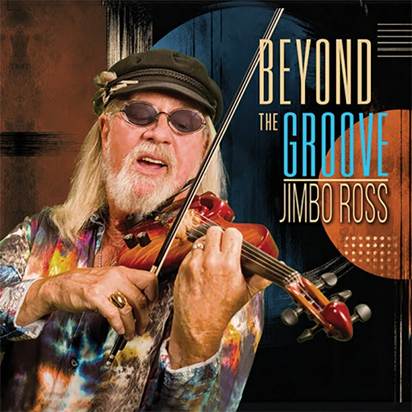
By Dee Dee McNeil
Jimbo Ross’s passion for music began in the backseat of his mother’s car. She would blast all the top 40 music on her car radio while her young son jumped up and down with joy. Born in 1953, James Vincent Ross would have been kindergarten age when he began hearing Elvis Presley singing “I Beg of You” and “Don’t” or the McGuire Sisters crooning “Sugartime.” The Kingston Trio had a hit record in 1957, “Tom Dooley” and it was number one on the Top 100 list. Chuck Berry was pumping up the airwaves with “Johnny B. Goode” and the Everly Brothers were singing “Bird Dog” or “All I Have to do is Dream” with their unique duet harmony. Jimbo said that’s when he began loving music, clapping and singing along with the music of the late 50s and the 1960s in the back seat of his mother’s car.
“Funny thing, her car was a Hillman. I’d be in the back seat of that car, and she had the radio turned up and we would be singing along with the songs. I’ve never ever seen a Hillman car since then. I don’t know who made it, but I remember the windows wouldn’t roll up and it started to rain one day on our way to Palm Springs. The water came rushing into the car ‘cause the windows wouldn’t close. We had to put our feet up in the air in the backseat, cause the water was flooding into our car. Meanwhile, I remember Bobby Blue Bland was singing on the radio,” Jimbo recalls that scene from his childhood, even the background music. We both start laughing.
NOTE: I looked up Hillman cars. They are now Classics. A British automobile marque created by the Hillman-Coatalen Company was founded in 1907. It was renamed Hillman Motor Car Company in 1910 and based in Ryton-on-Dunsmore, near Coventry in England. The company started out building bikes. They sold small and large Hillman cars until 1937. The Rootes Brothers bought a 60% holding in the company and Chrysler eventually bought Rootes and the remaining 40% of Humber’s shareholders. Hillman cars continued to be used under the name Chrysler until 1976.
“To this day, I have no idea where my mother bought that Hillman car. But we loved to move around in it and sing to the music. My dad was an amateur musician. He played piano by ear and was such a great guy. I remember he played the piano at home. He always played all the black keys. He played stride piano. I got a lot of my music from him. My mom sang in church, singing the hymns, but she wasn’t hitting any of the notes,” Jimbo chuckles.
“Her mom was a church organist. So, music was all around us. My folks were smokers. They had these Raleigh coupons laying around from their cigarette purchases. So, when I was about ten years old, they said, here, pick something out and I picked out a guitar from the coupon catalogue. Bam! I got that guitar with Raleigh coupons, and buried myself in Blues and Soul music. And I’ve still got that guitar. It was a Stella, a nice guitar. They still make them. But my first love was always the viola. I call her My Git Fiddle. G-U-I-T, like guitar.”
One thing remained true of Jimbo Ross over the years. He loved all genres of music with a particular affection for Blues, R&B and Soul-funk music. It would be much later when he discovered jazz.
In his Balboa elementary school music class, Jimbo signed up to play viola, inspired by his best friend who chose the instrument first. Ross took an immediate liking to the string instrument’s rich sound. Not only did he play it in school, but at age eight, he took private lessons on the viola, encouraged by his elementary school music teacher, Alvin Mills.
Years later, Alvin Mills was in a power position with the Brentwood Symphony. He was the founding conductor and music director of the Brentwood-Westwood Symphony. Surprisingly, Jimbo wound up playing with his old elementary teacher when he was called to perform with that Orchestra.
“Also, Alvin Mills knew my wife. She plays cello. She was performing with the Glendale Symphony, and he approached her to come play with his symphony. Alvin Mills was part of the Mills Publishing empire and it was crazy all those years later that we would run into each other on a professional level,” Jimbo recalled.
During this early period of his musical life Jimbo was exploring Soul music, blues, and R&B. At the same time, he took a deep dive into Bach while continuously studying classical music. Jimbo learned that his viola instrument seemed to lend itself more to jazz than Soul music, although he incorporated it into both.
“To me, viola is more like in the human voice range. The violin is more like a soprano saxophone or even an alto sax. The viola is responsible for harmony. I’ve played in orchestras all my life, sitting right in front of the woodwind section. We were all making harmony, adding color to the production. The viola is the middle voice. I learned a lot about harmony as a child. When I was a preteen, around twelve, I became infatuated with saxophone harmonics. I think I’m a frustrated, want-to-be sax player,” Jimbo admitted in a podcast interview with Matt Micucci.
“I always try to play my viola like a saxophone,” he shared with me.
It wasn’t just Top 40 music that Jimbo listened to as a young musician. He soon became in awe of jazz players too, like Phil Woods and the way he improvised during his saxophone solos. He was mesmerized by Charlie Parker and Stan Getz.
Jimbo Ross learned how to play jazz and specifically how to “swing” when he joined the Dr. Jazz ‘30s Swing band. They were playing all Django Reinhardt-styled gypsy jazz. He got a crash course in playing the blues and digging deeply into that jazzy gypsy style of music, playing tunes like “The House of the Rising Sun.” Ross was never one to be put into a box. He found beauty in all genres of music.
“Yeah, we were also playing from the American songbook, learning tunes by Ellington, Gershwin, Fats Waller and Louie Jordan. In the Dr. Jazz ‘30’s band was a guy named Jan Threlkeld. He was a local clarinetist who sounded a lot like Barney Bigart. He and Stan Ayeroff (on guitar) were the band leaders. It was that clarinetist who coined my name from James to Jimbo and that nickname stuck. We played at a little club called St. Charles Place, right off Woodward Avenue. It turned into the St. James Club. It was right down by the boardwalk. That was in the seventies when Venice was just a funky little town,” Jimbo Ross remembered.
When a bunch of respected studio session musicians popped in to hear the Dr. Jazz band, they admired Ross playing his viola. Consequently, they mentioned him to Don Ellis. Ellis was interested. After Ross met with the trumpeter and bandleader, he joined the Don Ellis Big band. Jimbo was still in his early twenties when he became part of the string ensemble with Ellis’s aggregation.
“Around that same time, I got a really good review from Leonard Feather, who was a respected jazz journalist back in the day. In July of 1977, we came off tour and played at Royce Hall. Leonard was writing and reviewing for the LA Times. He wrote a review that included me at the tail end saying, Jimbo Ross may be the only violist playing jazz,” Jimbo told me.
At his first rehearsal with the 22-piece Don Ellis Big Band, Jimbo was shocked to see Ellis had written a big band chart featuring him as a soloist. That was a huge complimentary gift to the young viola player. This gig rooted Jimbo Ross into the distinction of being one of the few working jazz violists in Los Angeles. This was the time when Don Ellis coined the introduction of his talented string player to audiences as the only jazz violist in captivity.
“Meantime, I was in Venice, California and making a living as a handyman. I was fixing water heaters and whatever, plus gigging with Dr. Jazz and later, Don Ellis. I was scraping money together to pay my $120.00 a month house rent. A celloist with Don Ellis at that time was dating a black violin player named Bill Henderson. She said he was playing on a lot of Motown Record sessions, and she introduced us when he came to our show. After that, he called me. We talked for an hour on the phone. The result was, he gave me my very first studio session. It came at the right time because, at that point, Disco was coming in and there were strings on everything. Around the same time, all my plumbing tools got stolen out of my car. But I never looked back. I became a fixture on the studio scene,” Jimbo told me.
“We were recording three records a day, going studio to studio. I played on tracks by The Gap Band, Shalamar, LTD, Tavares, then Tony Bennett, Bobby Blue Bland, Sarah Vaughan, and I did a lot of stuff with Ray Charles. I even played on an Earth Wind & Fire Record back in the day. I was in the right loop at the right time. I also worked at the Total Experience, that club on Crenshaw. Shalamar hired a string quartet to play along with them. That was us.”
In the late 70s and early 1980s, Jimbo Ross began playing with a fusion band called “Affirmation.” Their debut album was titled, “Lost Angeles” on Inner City Record Label. That label boasted an impressive roster including Jeff Lorber, Dan Seigel, Eddie Jefferson, Clifford Brown, Sun Ra and Jean Luc Ponty, to just name a few.
According to the official Affirmation discography, the band’s lineup at that time included Jimbo Ross on electric viola, alongside Thom Teresi (keyboards/synthesizers), Joe Gaeta (guitar), Tom Fowler (bass), David Crigger (drums), and Mike Fisher (percussion). Lost Angeles is widely regarded as one of the most innovative jazz fusion albums released in the early 1980s.
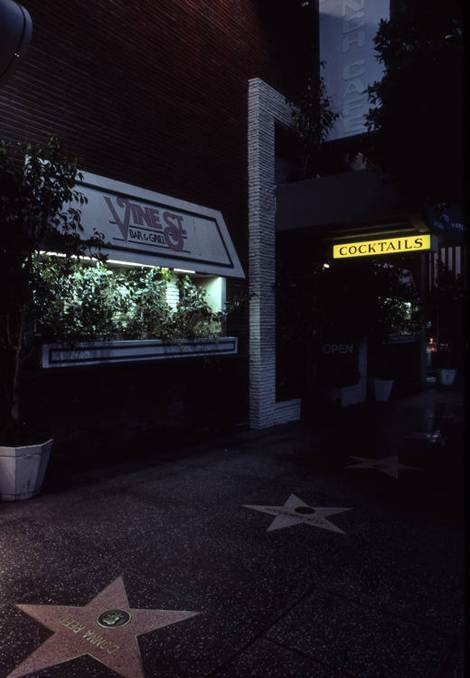
“Actually, with a group called Swing Street, in the eighties we opened the Vine Street Bar and Grill in Hollywood. It was with a band similar to Dr. Jazz. We had a clarinetist and three girl singers, me on viola, and drums. The clarinet and me had such good chemistry together. We used to swing that place down every night for two years, before it became an authentic jazz club and everybody was playing there,” Jimbo mused.
That history celebrates the jazz violist as a key figure in the historic Vine Street Bar & Grill legacy. Jimbo co-led the house band and helped establish that famous jazz room. It was one of this journalist’s favorite intimate jazz spots, seating only about fifty people and always with a packed bar.
In 1999, Jimbo Ross released an album called “Driven By the Blues.” It spotlights Ross on his awesome viola and lead vocals. The band featured plenty of shuffle blues and swing tunes performed with high energy! They also included songs like “You Can’t Judge a Book” with a strong zydeco arrangement. They played rocking Chicago blues tunes, like “I’m Tore Down.”
Starting In 2016, Jimbo released four albums that featured his deep love of zydeco blues. One album was called “Steady Rollin’ Man” and again highlighted Ross singing as well as playing his trustee viola. He was establishing his own solo career.
This was followed by “Zydeco Boogaloo and next by “Hit the Ground Runnin’ – Remix and Remastered. His ensemble was advertised as The Bodacious Band.
Members of his Bodacious Band varied, but one ensemble included Michael Sims, electric guitar, Mo Beeks on piano & Hammond B3 organ, Bradley Bobo on electric bass and backup vocals, Lennie Castro on percussion and Greg Alban, drums. The original bassist in Jimbo’s group was Tim Evans.
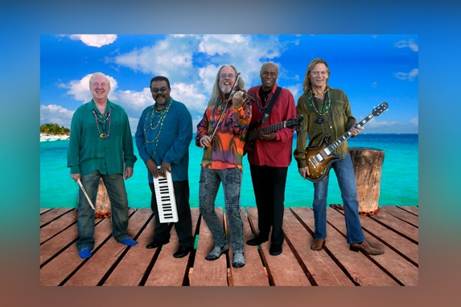
But for me, my favorite Jimbo Ross is the one who plays his five-string viola in a jazz setting.
In 2019 something very special happened for Jimbo Ross. He added a five-string electric viola to his instrument collection that was custom-designed by Ojai-based luthier, Brandon McDougall, the founder of Liquid Violins. McDougall added an E string to the traditional viola, giving Ross access to the violin’s upper register, but it still retained the viola’s rich middle and lower octaves.
In 2024, Ross began releasing albums of jazz. The first was titled, “Jazz Passion & Satin Latin.” I reviewed that album and remembered writing that he was the first one to ever make me enjoy the viola as a lead instrument in a jazz band. Ross’s touch on the viola is certainly distinctive and impressive. He made the instrument a solo thrill. Jimbo led the band with a number of familiar standard songs, adding a sensual flair all his own. When Ross plays “Polka Dots & Moonbeams” he tattoos the song on my heart with his viola interpretation. Although this is a Great American Song Book tune, Jimbo paints the song with brand new vivid colors, using his bow to splatter improvisation all over the face of this familiar song.
This album was followed by “So Do It.” That’s a challenging statement and Jimbo Ross decided to follow those instructions when he took a jazz path, u-turning back to his roots and recording this follow-up jazz album.
“Speak Low” is the popular song Ross opened this second jazz album with, using a moderate tempo jazz groove and featuring his sweet string instrument. In my review I wrote: Ron Wagner on drums and Peter Marshall on walking bass marched this piece into my listening room with energy and determination. The Ross viola/violin dances upfront, improvising freely. Joe Gaeta plays an impressive guitar solo. Then, the very gifted Stuart Elster adds his inspired piano improvisation. This opening tune sets the tone for what is to come.
“We recorded all these tunes ‘live’ in the studio to capture that spontaneous combustion that you can only achieve by feeding off of each other. … With my 5-strings, I can go down to those lower viola notes, play the lovely mid-range that resonates so beautifully on the viola, and soar high in the violin register all in one phrase. I really love the range of the viola, because it’s more in the gutsy human voice range that is appealing to the ear,” Ross explained.
Finally, the third and most recent album that Jimbo Ross released this year, 2026, is “Beyond the Groove.” On Benny Golson’s popular “Whisper Not” composition, Ross gives a showcase of his virtuosity in the upper register of his custom-built viola.
This new release includes several cover tunes that jazz aficionados know and love like: A Night in Tunisia and Groovin’ High by Dizzy Gillespie. I mean You and In Walked Bud, are both Thelonious Monk compositions. He covers a Bill Evan’s composition, Peri’s Scope, and some Horace Silver standards, Nica’s Dream, Nutville, and Juicy Lucy.
This string master puts his heart and soul into the music, inspiring his bandmates to do the same. In the midst of shifting tempos, inventive solos, and the magic of Jimbo Ross on his specialized viola/violin instrument, you will also enjoy his band. They are splendid at reinventing jazz standard songs that we know and love. Jimbo Ross and his ensemble make each familiar song sound remarkably refreshed.
However, there’s no question Jimbo Ross and his specialized viola are definitely the stars of the show!
* * * * * * * * * *

By Dee Dee McNeil
September 1, 2026
“I grew up when it was a time of rebellion. There was a culture that we grew up in at that particular time. We were changing our American names to African names and listening to Malcolm X speeches,” Wendell Harrison told me during a recent interview.
At the early age of fourteen, he was not only interested in politics, Wendell Harrison was already getting gigs at Motown playing his tenor saxophone. He was a part of the Choker Campbell Band. They were a Detroit live band that backed up popular working entertainers like Marvin Gaye and Aretha Franklin. That was before those artists became legendary. Harrison recalls being introduced to Stevie Wonder when the prodigy was just twelve years old.

“Everybody was talking about; he’s the next big thing! I was maybe seventeen years old. He was just a little kid, playing a bunch of instruments, and I was a kid too. But they were right. He turned out to be a monster!” Wendell Harrison recalled his early contact with Motown super stars.
It was not only Stevie Wonder who would become iconic, but most of those people Wendell Harrison was making music with would go on to become international legends. It was a time of great promise and incredible creativity in Detroit, Michigan.
“I could read music because music education in Detroit schools was happening back in the day. They started me on piano when I was five to keep me busy. I think it was a discipline thing. My mind was all over the place. Today, they’d call it ADHD. They felt like my mind was scattered. I couldn’t concentrate on nothing. So, the music seemed to help settle me down. I was a nervous kid. When I turned eight, my grandfather got me a clarinet. He said, this music thing seems to be working for this guy, and he knew I wasn’t crazy about piano. I took to the clarinet right away,” Harrison recalled his love of woodwind instruments.
“On my father’s side, he had a Ph.D. in Sociology. My mother, Ossalee Ida Punché, met my father at Prairie View University. My mother was a student in Professor Harrison’s class. He robbed the cradle,” Wendell Harrison chuckles when he tells me this story.
“My mother and father separated when I was born. He didn’t want to leave teaching at Southern University in Baton Rouge, Louisiana. He was bull-headed and my mother was just as stubborn. She was a Leo. They both had their own way of doing stuff. My father’s father was a preacher. My Auntie played piano and sang. Aunt Lula Mae Dixon had a Gospel radio broadcast. She was from Louisiana. Music was always in our family.
“My mother moved us to Detroit in the early 1940s with my maternal grandfather and grandmother. He sold his medical practice, and they bought property up there. She said my father was great, but he had his own life to live. They had two different mindsets. He wrote us letters and sent my mother money. She shared his letters with me.”
Although Wendell Harrison was surrounded by academia, he chose the less trodden path of music early in his life. He loved jazz and had big dreams of becoming a prominent jazz musician. By age fourteen, still in public school, he was picking up gigs backing up Motown artists. Singer, songwriter Morris Broadnax (who was one of Stevie Wonder’s mentors and co-wrote the big hit record “Until You Come Back To Me”) introduced him to his first band; the Choker Campbell Band.
“With Aretha, I worked on that video and hit record, “Freeway of Love.”
You know, as a jazz musician, I would also get calls from different people affiliated with Motown, because I could read music and solo. That’s how I got calls to work with Marvin Gaye, the Four Tops, The Miracles, and The Temptations. Not studio work so much, but on shows,” Wendell shared.
Wendell Harrison grew good strong roots in the music industry. While attending Northwestern High School, Harrison switched from clarinet to tenor saxophone. At Northwestern he met other like-minded, fledgling musicians like the now Charles McPherson, trumpeter Lonnie Hillyer, and the iconic drummer, Roy Brooks. Then, legendary pianist Barry Harris took Wendell under his wings. That tutelage would shape the rest of Wendell Harrison’s life.
“When I was studying with Barry, he was working with Cannonball (Adderly), Lee Morgan and Kenny Burrell. When you have a foundation like that, it digs really deep and dictates your career,” Wendell shared.
“At nineteen, I went to New York and started recording for Atlantic Records. I worked with Hank Crawford, Grant Green and Lloyd Price. One day, somebody said, Hey, back in Detroit Motown just blew up into a big company and Berry Gordy is the President. I said WHAT? They said James Jamerson was playing a mean electric bass. I said WHAT? Cause I knew James when he was playing an upright bass and sounded as good as Ray Brown or Oscar Pettiford.”
While Wendell Harrison was living in New York, playing his tenor saxophone and making jazz and blues music, Motown was making history. Being young, naïve, and inexperienced, Harrison soon came face to face with the seedy side of the world. The saxophonist became influenced by some very unsavory characters.
“I was with Hank Crawford for four and a half years. I cut four albums with Hank Crawford on the Atlantic Record label. In 1965 they released ‘Dig These Blues.’ In ’66 we cut ‘After Hours’, then ‘Mr. Blues’ in 1967.
“That same year we released ‘Double Cross.’ I stayed busy on the road and in the studio. Hank would hire these criminals. They knew how to play his stuff. They played his book and they were all from Memphis, but they were dope fiends. So, I was with these monsters as a young person. For months they were actually trying to get me to try drugs. I was bored to death playing the same music every day. Every night playing the same shit. We had a book of 20 to 30 tunes. After a couple of weeks, Hank would say, you got to memorize the stuff. It was only 30 tunes, and we were playing them every night. He wanted us to project emotions into the music. It wasn’t about the paper. It was about feelings. He wanted us to reach for those feelings. So, all the guys were very adaptable. But when we got these crooks in the band, these criminals in the band, I began to be influenced by heroin. My friend, trumpeter Marcus Belgrave, warned me not to get involved, but I was young and foolish. By the time I got back to New York, I was strung out. But I didn’t know it!”
In the Sixties, drugs were rampant in the jazz community. Many of our great and talented jazz musicians became addicted. Harrison had his own battle with addiction. Long story short, Wendell Harrison wound up returning to his Detroit roots from New York, addicted. With the help of his family and the musicians around him that loved him, he was convinced to go to California and get into the Synanon program to clean up his act. Even there, he found music and it helped to heal him. This was his first California connection.
“I met Esther Phillips at Synanon and Art Pepper. I recorded for Columbia Records during that time with an album created by Synanon titled “The Sounds of Synanon: The Synanon Choir – A Rock Jazz Contata – Prince of Peace.” I was playing on top of this orchestra and a 30-piece choir,” Wendell told me.
Lesson learned, his horn under his arm and feeling like a brand, new man, Wendell returned to Detroit in 1970. His friend, Marcus Belgrave got him a job teaching at Metro Arts and working with Executive Director, Amelita Mandingo.
A year after, Harrison released an album recorded with his good friend, trombonist Phil Ranelin. It was called, “An Evening With the Devil.” It was a project he put together under the group name of “Tribe.” It chronicled chapters of his young life, reflecting all he had been through in his first thirty years. It was political too, including spoken word blended seamlessly into their jazz arrangements. Lyrics and poetry of protest included views on abortion, police brutality and more. Sadly, many of these same things still plague Americans today. We continue to protest in 2026. This Harrison project also established his “Tribe” record label.

The genesis of the Tribe group was trombonist Phil Ranelin, (who would eventually relocate to Southern California and become another one of Harrison’s California connections), Marcus Belgrave, who had relocated to the Motor City, and sometimes Harold McKinney (pianist) joined them. They had Ike Daney playing drums, (he also played with the Miracles and The Four Tops), Marion Hayden (a fantastic, young, female double bass player) participated, and sometimes drummer George Davidson joined them. Janelle Lee was the vocalist on the early Tribe Album.
“When I came back from Synanon in California, I was clean as a whistle. I was teaching at Metro Arts. Then I married my first wife, who was a photographer and graphic artist. The guy living next door to my mother was a promoter who promoted gospel shows out of town. He found out I had moved back to Detroit, and he started producing jazz concerts. He showed me and my wife how to promote and how to market concerts by using a program booklet. Remember at church, those program books that sold ads? For my shows, we sold tickets in advance, and my neighbor showed us how to promote and market our jazz concerts with a program book.
“So, we were doing all these concerts and recording. Journalist, author and educator Herb Boyd looked at our program booklet that featured a lot of ads at that time. He said damn! This could be a magazine. You need to make a magazine out of this program and publish it. It would sell.
“Remember, I’m playing the saxophone, teaching at Metro Arts and running my new Tribe Record Label. Now, here he comes with another bright idea. But at that time, we had a lot of people that were interested in supporting us. So, my wife at that particular time, started studying magazine layouts. People started writing articles. We used the magazine as a reference for these young writers, a vehicle for them to be published. They could write for the magazine, use it as a reference, then start writing for the Michigan Chronicle or the Detroit News. It was like a base for them. A starting point. We would give them a little stipend from the ad money. We paid for articles and photos. That’s what advertising paid for, along with paying the musicians.
“That’s how our magazine “TRIBE” started. First, we produced it every four months. Then, it became available every two months; after a while, a monthly. Then, we got distributors, the ones who also distributed Ebony and Jet magazine. When we got that distribution, we got bigger ads. Then, ad agencies got involved. We were doing pretty good at that point, selling out of the back of my car, plus distributors meant I bought me another car,” Wendell traced the miraculous success of his Tribe Magazine achievement.
The magazine stayed afloat for the next eight years. Tribe record label continued to thrive. Then, Harrison had the bright idea to start The Clarinet Ensemble.
“You know, projects are like children. You can’t really keep up with them. The Clarinet Ensemble was put together, because I was always composing and writing arrangements for the clarinet bass line, contra bass, alto, regular B flat and E flat soprano, along with the rhythm section. We did a lot of touring.
“I used to tour with Eddie Harris. We did a recording called “The Battle of the Tenors.” It was a festival recording. At that time, The Munich label, Inja Records, picked up my group, (The Clarinet Ensemble), as well as Roy Brooks’ duet with Geri Allen. One release became the 1992 live album –‘Live in Concert: featuring my 18-piece Big Band and the Clarinet Ensemble.’ Then, there was a studio recording ‘Wendell Harrison and the Clarinet Ensemble: Rush & Hustle’ released in 1994 on Wenha Records. That’s the label my current wife (Pam) and I own.”
“That record I did with Eddie Harris also got a lot of play. ‘The Battle of the Tenors and Mama’s Lickin’ Stick.” That’s what I called my Clarinet Ensemble, ‘Mama’s Lickin’ Stick.’ The personnel on that “Rush & Hustle” album were me, Harold McKinney on piano, my wife Pamela Wise on piano, Greg Koltyck, Paul Onachuck, and Ken Hobenstreet, on clarinets.”
The Mama’s Lickin’ Stick Clarinet Ensemble also appeared without other accompaniment, strong and solidified as an entity that stands alone.
The players in the video above include Wendell Harrison, bass clarinet ensemble, Deborah Scales, alto clarinet, Lorenzo Macuja, B-flat clarinet, Josh Pittman, B-flat clarinet
Pamela Wise, Wendell’s current wife is a recording artist, a composer and pianist, talented in her own right. Wise specializes in Latin Jazz and has several album releases.
Wendell Harrison was awarded the title, “Jazz Master” in the 1990s by Arts Midwest. They are a regional organization supporting artists in the Midwestern United States and closely affiliated with the National Endowment for the Arts. Harrison promptly formed The Michigan Jazz Masters group in 1995. They toured throughout the USA, the Middle East and Africa.
In 2018, Harrison received the prestigious Kresge Award and was gifted with $50,000. In 2021, he won the coveted Jazz Journalist Award and a string of other awards followed.
Recently, he made another California connection. He recorded live at the Detroit Institute of Arts on July 20, 2025. That album is “A Tribute to Pharoah Sanders” that captures Detroit reed master Wendell Harrison and his ensemble, TRIBE, in a transcendent performance honoring Harrison’s longtime friend and fellow jazz icon. The concert was part of Detroit’s Concert of Colors festival and later was broadcast on PBS. Harrison is channeling Sanders’ spirit using deep tenor cries, hypnotic grooves, and Afro-spiritual improvisation. Surprisingly, this recording became another California connection.
“Well, I’ve been doing a Pharoah Sanders tribute which is a release that we have out currently. We’re planning a tour in Europe coming up in the fall. ORG record label in California picked it up first, then a Japanese label, P-VINE, picked it up for Asian distribution.

Harrison’s “Tribe” group, record label and magazine are historic now. I remember attending his sold-out concert with Phil Ranelin featuring the TRIBE group. Southern California’s own Merle Kreibich produced the show. After all these years, the TRIBE record label is still alive and well, even being “sampled” by some of music’s young lions.

Next month, Oct 1st. Wendell Harrison will celebrate 84 years on this planet. He’s still playing his horns and chasing new dreams. Harrison continues composing, arranging, recording, educating, and is quick to tribute those dear friends who have left their musical impressions planted on the hillsides of history. Harrison is an inspiration, and one of our living legends in the jazz community.
* * * * * * * * * * *

In 1968, pop singer Dionne Warwick cheerfully asked, “Do You Know The Way to San Jose,” which topped the charts and drew interest in the former state capitol region. Almost 60-years later, the city is well known; the largest in the San Franciso Bay Area and third largest in California. Tech dominance and development spurred the growth with a bourgeoning cultural and entertainment sector arising alongside. Some of those events highlighting the Silicon Valley are the Super Bowl, NCAA March Madness, the World Cup and the annual San Jose Jazz Summer Fest.
SJJSF, now in its 35th year, first originating as a one-day community event, is now the edifying “crown jewel” of the high-tech hub, and this year runs from August 7th thru August 9th with over 100 performers and groups taking command of the eight different stages, offering an unbelievable array of jazz expanding into related genres, such as Blues, Big Band, Funk, R&B, Latin, Salsa, Americana, Swing, New Orleans and even a taste of Hip-Hop.

Headlining Grammy-winners, Patti LaBelle representing legacy R&B, gospel and pop, and Trombone Shorty & Orleans Avenue in the camp of rocking and funky New Orleans music, will ramp the energy and excitement up to astronomical levels. Additionally, Grammy-nominated guitarist and hot-funk/smooth jazz star Cory Wong will be equally explosive and is well-known for his exceptional live performances. That also goes for Zapp (featuring Tuxedo,) Adi Oasis, The Soul Rebels, Afro-Cuban All Stars, and Lakecia Benjamin, who can generate crowd-pleasing sets for longtime festival attendees and curious new listeners.

SJJSF is also adept at presenting lesser-known artists and those on the verge of becoming the “next big thing.” In that vein, some of the performers include: 19 year old blues’ phenom Harrell “Young Rell” Davenport; innovative trio New Jazz Underground who merge traditional jazz with hip-hop, pop and Afro-Latino; San Jose’s M’sippi Slide-a rebirth of powerful classic blues, R&B and soul; Parlor Greens-an exciting new organ trio; while Aja Monet is a powerfully engaging poet/lyricist/activist; from Southeast LA, The Altons possess an alluring sound full of distinctive and often romantic vocal harmonies; and guitarist, banjoist, singer and songwriter Mitch Polzak-a larger-than-life Western Swing Hall of Fame Inductee.

Another appealing aspect of San Jose’s annual fete is its highlighting of jazz artists who are not yet superstars, but have the potential, talent and artistry to become superstars. Among them are: Two-time Grammy Award-winning vocalist Nicole Zuraitis; Visionary-Steel, a sextet from Melbourne, Australia who intermix music from around the world into modern jazz; legendary Herbie Hancock Headhunter’s drummer Mike Clark with New York’s top players for post-bop and hard-bop explorations.


Veteran tenor saxophonist Javon Jackson and Seven-time Grammy Award nominated vocalist Nnenna Freelon will engage fortunate attendees with a high caliber band that includes alto saxophonist Charles McPherson; San Jose born and raised drummer Sylvia Cuenca, with experience collaborating with legends, Joe Henderson, Clark Terry, Ernestine Anderson and others, leads a dynamic ensemble to serve up traditional jazz with new interpretations.

Additionally, Juno Award-winning trumpeter, vocalist and composer Bria Skonberg, considered a rising star brings new vitality to jazz; the Top Shelf Big Band, a 17-piece South Bay LA assembly drawing from jazz and swing classics is led by Grammy-winning Wayne Bergeron one of the most sought-after lead trumpet players in the world; and The Charles Brown Project features Nicolas Bearde, described by JazzTimes as “a richly impressive amalgam of Bill Withers and Billy Eckstine” who’ll inject depth and warmth to the Blues and Rock and Roll Halls of Fame singer/songwriter’s music, which influenced Ray Charles and Sam Cooke.

Alternatively,Sunday morning will overflow with delectable food and uplifting free music, featuring vocalist Joyce Randolph accompanied by a keyboardist Janice Maxie Reid, during the Gospel Brunch: 10am and 1pm at the Marriott San Jose.
SJZ Summer Fest 2026 arrives at a time when the city itself is undergoing a transformation of its perception worldwide. With millions observing the region, Summer Fest offers something that no stadium or broadcast can replicate: a wonderful sense of place. It is a living, breathing expression of San Jose’s diverse community and cultural curation as the country’s 12th largest city. For three days, the downtown area becomes a walkable, immersive landscape of sound with eight stages, buskers, more than 100 performances, a club crawl, and a lineup that reflects the full spectrum of today’s top touring artists. It’s a festival that could only happen in San Jose.

36th Annual San Jose Jazz Summer Fest 2026
August 7-9, 2026
Plaza de César Chavez Park, San Jose, CA
summerfest.sanjosejazz.org
(408) 288-7557
In addition to the great music at SJJSF, the Santa Clara Valley offers a variety of indoor and outdoor activities for all levels of fitness. Amoung them are breathtaking vistas, Michelin Award–winning restaurants, children’s activities and diverse points of interest. Popular nearby attractions include:
Santana Row

Santana Row features a vibrant mix of over 50 shops, 30 restaurants, CineArts movie theatre, and the boutique Hotel Valencia. With your pick of dining options including everything from burgers and Italian to Asian fusion and French, you’ll have plenty of choices to refuel while shopping at The Row’s top stores. Plus, catch live music and outdoor yoga classes in the outdoor parks and plazas, and enjoy convenient parking all within walking distance.
377 Santana Row
San Jose, CA 95128
www.santanarow.com
408-551-4611
Bay 101 Casino

Open 24/7, the Bay 101 Casino is a spectacular venue for card lovers. This world-class cardroom features daily tournaments. You can take part in a tournament and enjoy delectable cuisine. Not only can you enjoy eating in the Sports Bar or Restaurant or the club’s deli, but you can also even be served tableside as you concentrate on your game. There is even instruction available if you want to improve your card-playing skills. With forty-nine card tables on two casino-style floors, you are sure to enjoy the fast-paced action.
1801 Bering Drive
San Jose, CA 95112
ttps://www.bay101.com
MUSEUMS & PARKS
The Winchester Mystery House

This is an eccentric Victorian mansion located on six acres that was once the personal residence of Sarah Winchester, the widow of gun magnate William Wirt Winchester. Mrs. Winchester believed that spirits killed by her deceased husband’s rifles haunted the house, resulting in her building odd rooms and staircases to keep them at bay.
525 S Winchester Blvd,
San Jose, CA 95128
www.winchestermysteryhouse.com/
(408) 247-2000
Rosicrucian Egyptian Museum and Planetarium

This a theosophical museum devoted to Ancient Egypt with the largest collection of ancient artifacts and exhibits in the Western U.S. It’s located at the Rosicrucian Park in the Rose Garden neighborhood of San Jose and was founded by the Ancient Mystical Order Rosae Crucis.
1660 Park Ave
San Jose, CA 95191
www.egyptianmuseum.org/
(408) 947-3635
The Tech Museum of Innovation

Considered more than a museum and casually called “The Tech,” is a “must” for techies, and hardly a traditional museum. Significantly, the museum has three different levels and is devoted to four themes: Communication, Exploration, Innovation and Life Tech.
201 S Market St
San Jose, CA 95113
www.thetech.org
(408) 294-8324
San Jose Museum of Art

Founded in 1969 in a building that was once a post office and the San Jose Main Library for 30 years. It was named a California Landmark and added to the National Register of Historic Places, with a large collection of 20th and 21st century West Coast art.
110 S Market St
San Jose, CA 95110
sjmusart.org
(408) 271-6840
Japanese American Resource Center/Museum

This the result of a research project on Japanese American Farmers in the San Francisco Bay Area’s Santa Clara Valley that developed into courses on Japanese American History and was established as an institute in 1987. Included in its 6,400 sq. ft. hub located in the Japantown section of San Jose, are artifacts, exhibits, film screenings and lectures related to the Japanese American Experience.
535 N 5th St.
San Jose, CA 95112
www.jamsj.org
408) 294-3138
Municipal Rose Garden

A little over two miles from Downtown San Jose, the 5.5 acre, almost 100-year-old park (est. 1927) is a relaxing delight for rose lovers. Visitors can leisurely peruse the grounds, picnic or just relax among 3,500 shrubs representing 189 rose varieties.
Dana Ave
San Jose, CA 95112
www.sanjoseca.gov
(408) 794-7274
Japanese Friendship Garden

This beautiful and tranquil garden provides a peaceful expanse in the middle of the city. The Japanese Friendship Garden (JFG) is a living symbol of the “Sister City” relationship between Okayama, Japan and San Jose. It is known as a popular setting for weddings or celebrations, but it best serves San Jose residents as a place to sit and reflect on the beauty and power of nature.
1300 Senter Road
San Jose, CA 95112
www.sanjoseca.gov
408-794-7275

California’s Great America

A full-scale amusement park with rides, attractions and food for kids, big and small that rivals Disneyland and Magic Mountain in size and scope
4701 Great America Pkwy
Santa Clara, CA 95054
www.sixflags.com/cagreatamerica
Children’s Discovery Museum

Apple Computer Co-Founder Steve Wozniak was the largest private donor when this top-rated museum and science center opened in 1990. This 52,000 sq. ft. facility is a mecca for interactive exhibits and open-ended explorations oriented to children.
180 Woz Way
San Jose, CA 95110
www.cdm.org
(408) 298-5437
Happy Hollow Park and Zoo

A 16-acre amusement park and zoo for children one year old to 18. It features a puppet theater, animal hospital with indoor and outdoor quarantine, surgery and radiology and an education center made from hay bales for year-round classes.
748 Story Rd
San Jose, CA 95112
happyhollow.org/
408-794-6400
LEGOLAND Discovery Center Bay Area

Challenge your fellow group members and/or kids to beat your high score on Imagination Express, team up and build the fastest race car, be part of the story in the 4D Cinema and so much more! This 31,000 square foot indoor attraction provides the ultimate educational field trip or group outing for children ages 3 to 10 years old.
870 Great Mall Drive
Milpitas, CA 95035
www.legolanddiscoverycenter.com/bayarea/
669-213-0612
RESTAURAUNTS

Eos & Nyx

A sleek restaurant and bar that’s quickly become one of the city’s most talked‑about dining destinations, blending California’s seasonal ingredients with bold Mediterranean influences in a chic, contemporary space. Named after the Greek goddesses of day (Éos) and night (Nyx).
201 S Second St #120
San Jose, CA 95113
www.eosnyxsj.com
(408) 831-6880
The Pressroom

A streamlined American restaurant and cocktail destination housed in the historic 1884 Lyndon Building that was once home to the San Jose Mercury News, blending the site’s journalistic legacy with a modern, vibrant dining experience.
189 W Santa Clara St.
San Jose, CA 95113
pressroomsj.com/
Petiscos by ADEGA

This is a popular Portuguese-inspired restaurant in downtown San Jose known for flavorful small plates designed for sharing. Founded by the team behind San Jose’s acclaimed Portuguese dining scene. Petiscos are the Portuguese equivalent of Spanish tapas, with dishes that draw on traditional family recipes and bold flavors.
399 S First Street
San Jose, CA 95113
www.petiscosadega.com/
(408) 320-2884
The San Pedro Square Market

This is a go-to dining and social destination where you can always find what you are looking for among the variety of exciting food vendors. Options include pizza, Latin American food, craft beer, sushi, fusion hot dogs, and much more.
87 North San Pedro Street
San Jose, CA 95110
sanpedrosquaremarket.com/
(408) 476-0943
WINERIES

J. Lohr Vineyards & Wines

1000 Lenzen Ave.
San Jose, CA 95126
www.jlohr.com
(408) 918-2160
Coterie Cellars

885 W Julian St.
San Jose, CA 95126
www.coteriecellars.com/
(408) 288-5553
Alamitos Vineyards

23505 Alamitos Rd
San Jose, CA 95120
www.alamitosvineyards.com
408-380-2230
BREWERIES
Fox Tale Fermentation Project

30 E. Santa Clara Street
Suite 120
San Jose, CA 95113
www.foxtalefermentationproject.com/
(408) 216-0158
Clandestine Brewing

980 South 1st Street, Suite B
San Jose, CA 95110
www.clandestinebrewing.com/
408-520-0220
Hapa’s Brewing Company

San Jose Creekside
59 Barack Obama Blvd.
San Jose, CA 95110
hapasbrewing.com/
(408) 219-3232

For more info go to: www.sanjose.org

By Dee Dee McNeil
June 1, 2026
Rickey Woodard admits he was a quiet, shy little boy who liked playing baseball, but he wasn’t much of a sportsman. Where he really came alive was when he played saxophone in his father’s family band.
“There were six of us. I’ve got two brothers and three sisters. When I was growing up in Tennessee it was segregated. We went to an all-black elementary school, then an all-black junior high school and an all-black high school. My dad got us started in music. He played the piano and the organ. When we went on the road, he took his organ. Both my brothers played saxophone. Ray played alto and tenor sax. My brother James played the alto sax. My sister Vicky played the electric bass. I had an uncle that played the drums. I had another cousin in the family, who lived with us. He played the saxophone too. So, it was a family band. There were a couple of times when some trumpet players in the neighborhood wanted to join the band. But my dad didn’t like trumpets. So, we had three or four saxophones up there on stage. We played Top 40 music, all the hit songs you heard on the radio, like Motown and Wilson Pickett,” Rickey told me about his early introduction to music.
This journalist remembered the days when Rock and Roll Shows were performed at the FOX Theater in Detroit. You could pay one entry fee to hear four or five of the top groups in concert. I heard Motown groups like Smokey Robinson and the Miracles on the same stage with The Royal Jokers, and Frankie Lymon and the Teenagers. Frankie Lymon was like the first teen idol before Michael Jackson. I shared my memories with Rickey Woodard.
“Yeah, George Bohanon used to tell me about those shows,” he recalled. “He was from Detroit too. In my father’s band we covered all those Motown hits.”
Before Rickey was even in his teens, he recalls listening to David ‘Fathead’ Newman on Ray Charles records. At home, his parents played a lot of Ray Charles. That’s when Ray had big hit records singing, “I Got a Woman, way cross town who’s good to me” and hits like “I Just Love Her So.”
I remembered. Back in Detroit, all my teenaged friends were dancing to “Drown In My Own Tears” and “Ain’t That Love?” released on the Atlantic Record label. Rickey Woodard’s parents were listening to Ray Charles too, in Nashville, Tennessee.
The whole world was being introduced to a merging of gospel music, jazz, and a twang of country/western music wrapped up, like a warm hug from the Ray Charles band. Rickey told me he was greatly influenced by Ray’s star saxophonist, David “Fathead” Newman. Although he was playing Top 40 gigs with his dad’s band, Rickey had a love and passion for jazz early on.
So, it was funny how Rickey Woodard wound up playing in the very Ray Charles band that he grew up listening to as a child. The video below pictures Rickey, front row with Ray Charles.
Ricky explained to me how he relocated to California. “I came out here the first time in 1975. I just got in my car and drove out here, ‘cause I wanted to check it out. I always wanted to play jazz. My dad had a lot of records, so we always listened to jazz at home, folks like Count Basie, Duke Ellington, Fletcher Henderson, my dad had all those records. At home I listened to jazz, but we played Top 40 in the band.
“So, I came out here, I was about twenty-five. I met a few people. My dad kept sending me money, but that third time I called him for cash, he told me, ‘I’m gonna send you this money so you can gas your car up and bring your butt home. (laughter) You know, Dee Dee, I met a lot of people when I was out here, a lot of musicians. People heard me play around town.
“So, I go home to Nashville. It just so happened, Ray Charles and his band were coming down to Memphis. One of the guys who was playing with Ray, I think it was the organist and pianist, James Polk who also conducted for Ray Charles, he might of recommended me. He told Ray I was in Nashville and that I was a good little player. I got the call to come down there to Memphis when one of their guys got sick and didn’t show up. I was so scared. I didn’t have any rehearsal or anything. I arrived and played that same night,” he explained.
“Afterwards, the band leader, Clifford Solomon told me, ‘Well, the old man likes you. He wants to know if you want to join the band and come out on the road with us?’
“He asked me how much time I needed to join them and I told him, I was ready to go right then. I had my suitcase and my saxophone. That’s all I needed. I was so excited I didn’t even ask how much the gig was paying.” (laughter) “My mom was happier and more excited than I was!” (more laughter).
“That’s amazing cause I know you said that horn player with Ray influenced you a lot,” I responded.
“Dee Dee, did you know Rudolph?” Rickey asked me.
“Sure. I knew Rudy Johnson. He played on my first album, ‘Where Can Our Leaders Be?’ He used to ride a motorcycle, right?”
“Yeah – he rode a motorcycle. He was a beautiful guy. When I was out here in California the first time, I took lessons from Rudy. I took lessons from him in 1975. So, between he and James Polk, that was the reason I got in the Ray Charles band,” Rickey told me.
Ray Charles was a mentor. Rickey admitted, at first he was over-playing on most of his solo efforts with Ray. He just wanted to be his best and to impress Ray. One rehearsal, Ray Charles called him over to the side.
“He called me ‘New Boy’,” Rickey remembered the nickname Ray gave him. “He said ‘New Boy,’ when we get to the solo part on that, and it’s a ballad, I want you to just take your time on that and play it slow and just talk it out to me. I told him I had been trying to give each song everything I had. But he said, No! Just talk it out to me. By listening to Ray Charles every night and how he could sing a ballad and lay the beat back, I learned what he was talking about. He didn’t criticize me on the up-tempo tunes, but when I played solo on a ballad, he gave me advice and counsel,” Rickey said during a Graham Dechter interview.
Woodard took that advice from ‘the genius’ to heart. He worked with him for over eight years. Other influences were Stanley Turrentine, Hank Mobley, and Dexter Gordon. Listening to them made Rickey want to play long tones and master his technique.
There were plenty of places I used to enjoy hearing Rickey Woodard play. One of them was in San Diego with the Jimmy and Jeannie Cheatham band. When they weren’t touring, the Cheatham’s had a Sunday afternoon jam session at the popular Bahia Hotel in Mission Bay, San Diego. In fact, that jam session helped break the color stigma for that exclusive hotel. It promoted a mixed crowd that came to hear the jazz, no matter what color the musicians were.

“Yeah – I was in that band with Curtis Peagler, Nolan Shaheed, Clora Bryant, Dinky Morris and I cut a couple of records with them too. That was the Sweet Baby Blues Band. For Concord records we recorded “Basket Full of Blues” in 1991. We followed up with “Blues and the Boogie Masters.”
I first was introduced to the great talents of Rickey Woodard through saxophone icon, Charles Owens. Dwight Dickerson (pianist) and I opened the first jazz club in downtown Auckland, New Zealand. It was 1983 when we featured our premiere American guest, none other than tenor saxophonist, Rickey Woodward.
During that 3-month gig, Rickey told me he experienced one of the oddest things that ever happened to him on the road.
“Dwight Dickerson and I were on the bus, coming back to the house from a rehearsal, when all of a sudden the bus started rolling to a stop. It pulled over to the sidewalk curb with no bus stop in sight. We wondered what was going on. The driver swiveled in his seat and spoke to the bus riders,” Ricky explained.
“Looks like we’re out of gas folks, and there are no more busses running. You’ll have to make other arrangements.”

“Well, Dwight and I looked at each other in shock. A bus running out of gas was unheard of in America. We were laughing when we exited that New Zealand bus with a stream of other passengers. Dwight and I both loved to walk, so we started doing just that. We laughed, walked and talked all the way back to our beach town residence. That was something I had never experienced before or since,” Rickey laughed as he told me that strange story.
Coming off that international tour, I’m proud to say that was the first time Ricky Woodard was featured as “the star” of a major jazz performance overseas. Once he returned to California, it was time to settle back into the local jazz scene and find a gig.
“My gig touring with Ray Charles continued. I had met Jeff Clayton when I first came out to California in 1975. We became good friends. People knew I had been out on the road with Ray for a while, but I couldn’t do it anymore. It was a little too much for me. Jeff and I kept in touch over the years. So, Jeff knew the Frank Capp band needed a saxophone player. Jeff recommended me to Frank Capp. They were playing somewhere and Frank called me and gave me the third degree.
“Frank had a bunch of questions. He wanted to know how long I’d been playing? Do you know Count Basie’s music? I said yeah, I came up on Count Basie. He was trying to see if I could read the charts or if knew big band music. Oh, he was real skeptical. Finally, he invited me to do a one-nighter. So, I played that first gig with him. After that, I was part of his band. I recorded three albums with Frank Capp. I did two small group records with him. One was called, The Frank Capp Trio Presents Rickey Woodard on Concord Records,” Rickey told me.
In 1991, Rickey released “California Cooking!” featuring his old friend from the New Zealand gig, Dwight Dickerson on piano, bassist Tony Dumas and Harold Mason on drums.
These album releases were followed by “Night Mist” featuring Eric Reed on piano, Dumas on bass and Roy McCurdy on drums. In 1992, Woodard released “The Tokyo Express” featuring James Williams, Christian McBride and Joe Chambers. In 1994, On the Concord label he released “Yazoo” this time featuring Cedar Walton on piano, Jeff Littleton on bass, Ralph Penland manning the trap drums and trumpeter Ray Brown.
The good music just kept coming. One unexpected opportunity surprised Rickey. He was contracted to do a gig with Frank Sinatra at the Beverly Hilton Hotel. At the time, that was a building owned by Merv Griffin and known for hosting various high-profile events.
“I played with him at the Beverly Hilton. Funny thing, he just kind of took a liking to me. At the Beverly Hilton, he had these guys, like bodyguards around him. They wouldn’t let anyone come near him. We were doing soundcheck rehearsal and nobody was there from the public. So, on a break, I walked over closer to Frank Sinatra, smiling my best smile, hoping to get a chat with the famous singer. Those guys around him stopped me. That’s when Frank said, it’s alright. It’s alright. He let me walk up to him. I introduced myself, told him what I played and how happy I was to be working with him. Some small talk followed. But I could tell, Frank took a liking to me. After that, he took me with him on a few gigs he had up North.
“The other great experience I had was playing with Ella Fitzgerald. We did the Hollywood Bowl and then we did something in the desert and something up by Oxnard, California. At the Hollywood Bowl, something weird happened. After she finished her set, I noticed that the Master of Ceremonies didn’t take to the microphone to introduce her as she exited. I was so upset by that lack of respect for this great lady’s performance that before she completely left the stage, I ran up to the microphone and shouted, Ladies and Gentlemen, the great Ella Fitzgerald!
“Ella paused during her exit, turned to look at me, and blew me a kiss. Wow! That’s a moment I’ll never forget! There were those three icons who really made an impression on my life: Ray Charles, Frank Sinatra and Ella Fitzgerald,” Rickey affirmed.
Meantime, the music kept pouring out of Rickey and finding its way to the ears of the people. In 1995, Concord records released “Quality Time: Frank Capp Quartet Featuring Rickey Woodard.” They also released in 1996, “The Silver Strut” with Rickey as the leader. Then “The Tenor Trio in 1997, with Rickey, Ernie Watts, Pete Chrislieb, Gerry Wiggins, Chuck Berghofer and Frank Capp.
From 1989 to 2014, Rickey recorded a dozen albums with the Clayton-Hamilton Jazz Orchestra. During those sessions, he interacted with some of the most gifted and talented musicians on the planet. He played with Ernestine Anderson, Milt Jackson, Diana Krall, John Pizzarelli, Charles Aznavour, Trijntje Oosterhuis, Ernie Andrews, and Barbara Morrison to just list a few.
There is one thing about Rickey Woodard’s tone and presentation that has always reminded me of the great Gene Ammons, one of my favorite saxophonists on the planet. I shared that with Rickey.
“Dee Dee, Gene Ammons is one of my favorite players. I love Gene Ammons. Charlie O and I both love Gene Ammons. He’s one of those players who just has that sound. He can just walk into your front room, take his horn out, and have a conversation with you.”
Another icon that Rickey Woodard toured with and recorded with was the legendary Horace Silver. I asked him what it was like playing with Horace.
“I did about two or three records with Horace. I went on tour with him. I think he came to one of my gigs and asked me to come attend one of his rehearsals. I went. Afterwards, he asked me to come on tour with him. We went on-the-road, and I recorded a couple of records with him. Red Holloway was on one of those albums along with James Moody, Eddie Harris, Bob Maize on bass and Carl Burnett on drums. O.C. Smith was on vocals. They released that record in 1994 called ‘Pencil Packin’ Papa.’”
That same year Rickey was on the session for the Kenny Rogers album “Timepiece” as a sideman. It was a studio session, where they handed the musicians their charts and cut the tunes. But Rickey recalled a tour where Rogers and Ray Charles performed in concert on a double bill. The two super stars appeared on several TV shows like the Dinah Shore Show in 1979, where they sang together, and Ray appeared on “A Special Kenny Rogers” TV taped tribute.
By now, Woodard was a popular, in-demand reed player. He appeared on the Fujitsu Concord 26th Jazz Festival. They recorded it and released “Seven Sensational Saxophones” on an album that included Rickey Woodard, Frank Wess, Bill Ramsay, Chris Potter, Ken Peplowski, Gary Foster and Jesse Davis. Rickey went on to back Nnenna Freelon on her 1996 album “Shaking Free.” I’m honored to say he played with me on my “Storyteller” album released in 2014.
Rickey Woodard’s current album is another feather in the cap of this master musician, composer and popular artist.
“My newest album is called “You Gotta Shake It.” I got that title from a little song that Horace Silver did called,“You Gotta Shake that Thing.” I liked the song, so I just named my album “You Gotta Shake It” and we put Horace’s song on the record. I wrote about four or five of the tunes on the album. I’ve written so many songs, well over 400 compositions. John Clayton is on this record with me. He wrote one of the songs. … We recorded a Horace Silver song and a couple of Hank Mobley tunes. We actually recorded this album about three years ago, but in the last couple of months they released it.
“All these years in the music business have always been good to me, because I’ve got my horn. I can sit here and write my songs and play my music. I just love to play! To this day, I still take my horn out every day and I play it,” Rickey affirmed.
I know he’s telling the truth because years ago, when he joined me and Dwight Dickerson in Auckland, New Zealand, we all lived in the same rented house a block from the ocean. The house had a Mother-in-Law apartment attached with its own entrance. We used that space to house our guest musicians. Every morning, Rickey’s beautiful tenor saxophone songs would start my day. He would practice for about three straight hours, non-stop and with gusto!
Woodard’s dedication to his craft, his axe, his career, and his emotional attachment to his horn continues today. He shares his love of music with his doting audiences. He’s passionate and sincere with every breath he takes to play his tenor saxophone.
Rickey Woodard is another Southern California living legend who continues to share his love and appetite for jazz, blowing it like celebratory confetti from the bell of his horn.
* * * * * * * * * * *

Pictured above is David Leach, Kye Palmer, Larry Nash, Angie Wells, Yvette Devereaux, Paul Kreibich, Rickey Woodard and Richard Simon at a Los Angeles gig with bandleader Nash.

Jazz will abound and will be very much alive on the Los Angeles Coast for the inaugural SANTA MONICA INTERNATIONAL JAZZ FESTIVAL. It coincides with the 100th birthday of the historic Route 66, which ends in the city of Santa Monica. Curating the major jazz event is none other than the legendary bassist, multi Grammy-winner, NEA Jazz Master and now Artistic Director/Producer, Stanley Clarke. He’ll be included in the lineup for two of the festival’s four concerts that start on May 1st with keyboard wizard Hiromi at the downtown Los Angeles Orpheum Theatre.

The Artistic Director assembled other colleagues such as cosmic saxophonist Kamasi Washington to headline on May 9th at Tongva Park, along with his group, consisting of longtime friend, former Police drummer, Stewart Copeland, hip-hop/jazz/electronica pianist Kiefer and dreamy trumpeter/vocalist Keyon Harrold. Electronic/funk KNOWER (full band show), fusion ensemble Miles Electric Band, and composer/song writer Sam Smylie will also be on the lineup that day.

The day before, May 8th at the Broad Stage, SMIJ will present a tribute to John Coltrane, commemorating his centennial. It will feature fast ascending saxophonists Isaiah Collier and Lakecia Benjamin, along with Tenor Madness. That group comprises legacy players: Hubert Laws, Marvin “Smitty Smith, Eric Reed, Aaron Shaw, Emilio Modeste and Clarke. Additionally, on May 3rd SMIJS will host a free concert on the Third St. Promenade, encompassing Elijah Fox, Genevieve Artadi, Duffy XUhlmann, Billy Mohler, Instant Alter, Varad Sahasrabudhe, Aidan Farrell and the Samohi Jazz Combo.

“It’s going to be fun,” Clarke commented by phone from his home, “music is interesting and kind of a spiritual part of me.” The legendary bassist has lived in neighboring Topanga Canyon for about 30 years and made his first appearance at the Santa Monica College adjacent Broad Stage in 2017. It was founded and sponsored initially by super philanthropists and art patrons, Eli and Edythe Broad, and opened in 2008. Remarkably, the venue’s artistic team immediately bonded with the extraordinary bassist and local resident, and claimed him as their own.

That was the beginning of the astounding relationship between them, and Clarke performed there biennially. In 2023, he began a three-year residency that involved teaching (one of his biggest loves) and working with Santa Monica College and Santa Monica High School students. They took a giant leap in 2024, by producing The Future Sounds of Jazz one-day festival. It included appealing up-and-coming artists such as, Cameron Graves, Connie Han, Ruslan Sirota, Jahari Stampley, Judith Hill, Gretchen Parlato with Gerald Clayton, and THE GEMINI PROJECT with Isaiah Collier and Jeremiah Collier. Additionally, the mega-bassist performed with the SMC Jazz Combo and Jazz Residency Students from Santa Monica High School.

Rob Bailis, Artistic and Executive Director of the Broad Stage assessed, “That went incredibly well. We learned a tremendous amount from that pilot and the thing we took away from it was the end of night jam with Stanley anchoring. That’s when we completely saw the magic and vibe of what was completely different about doing festival work [compared to a concert].”
The mega bassist responded, “It was really nice and touching to see these kids do their thing. I told them (the creative team), I will do this for you, but on the third year, you’ve got to go bigger—off campus.” That was a confluence of thoughts for Clarke, because he had strolled around the Third Street Promenade and Santa Monica pier area. After dining and/or shopping many times there with his wife, he would say to her, “This reminds me of Nice, France. I can’t understand why they’ve never had a festival here.”
Clarke proposed putting on a big festival that “wasn’t too big or small” to the Broad Stage Board and Creative Team. It would be in the style of European jazz festivals, whereby the city, neighbors, tourists and people who never been to a jazz festival would get involved. Bailis noted, “When Stanley joined us as an Artist-in-Residence, he shared with us this vision he had been dreaming of for many years. He also wanted build it in the context of the arriving generation receiving their cultural inheritance in full.”

Remarkably, there has never been a full-fledged jazz festival held in Santa Monica, a destination known for being picturesque, casual, having accessible beaches, fine dining, and its’ popular Promenade and historic pier. The closest thing to one was Jazz at Santa Monica Civic ’72, which included a historic box set, initially only sold through mail order until 1991, when it became available in record stores as a three-disc set. It encompassed icons: Ella Fitzgerald, The Count Basie Orchestra, Oscar Peterson and many others. Additionally, Santa Monica has had several summer concert series such as, Jazz on the Lawn and The Santa Monica Pier hosts Jazz Night, along with short-lived clubs The Ash Grove on the Pier and The Vic.
Unlike those previous efforts, The Santa Monical International Jazz Festival’s main objective includes attracting younger audiences and families. In that regard, Clarke stressed that early in the day when the festival shows first open up, (except the Orpheum) “we’re going to have high school bands and soloists who are taking a shot at becoming professional musicians, and we hope people will bring their kids. I would love to see people from Santa Monica, LA, Compton or wherever to take a drive over. There’s going to be lots of food, [music, kid stuff and good times]—it’s a real, real festival and it’s for them.”
Bailis added that Clarke’s involvement ensures that the artistic caliber of the festival will be high. Also, it has three producing groups, the Broad Stage, City of Santa Monica and SM Productions (Clarke and Martin Fleischmann). Bailis, closed saying, “The City is 100 percent behind the festival and coming in as a full partner by offering the Third Street Promenade (between Arizona and Santa Monica Blvd.) and Tongva Park, which will be sealed off as a ticketed location. This is really an amazing gift they’re giving us to keep the venues safe and everyone as comfortable as possible.” For more info go: www.smjazzfest.com, stanleyclarke.com/ and broadstage.org.

By Dee Dee McNeil
On March 16th, a warm California Sunday evening, I attended the concert of KEM. What a riveting and exciting experience.
Kim Lamont Owens is a soulful singer, an artist simply known as “KEM.” His voice and music cross borders and genres. He’s often classified as an R&B soul singer, but his style and songwriting could easily be interpreted as smooth jazz.
KEM’s roots are planted deeply in today’s USA music capital of Nashville, Tennessee. He was born there. However, KEM moved to Detroit, Michigan (another music capital of the world) at five years old. There, he was raised in both Southfield, Michigan and in the city of Pontiac, just outside of Detroit.
KEM’s first gold record was his debut album as an artist, called “Kemistry.” He sponsored the recording himself by working as a wedding band singer, waiting tables, and using his American Express card.
As an independent artist, KEM’s music was so unique and infectious, it received plenty of attention and airplay. People loved his sound. Consequently, the resulting popularity teased Motown Records. Here was an independent artist who could make the ladies swoon like Marvin Gaye, but also had a jazzy edge, a tone similar to Al Jarreau. Motown wanted him on their label.
When Motown re-released his debut album, it sold more than 500,000 copies and was quickly certified Gold by the RIAA. But that was just the beginning.
His next release hit the airwaves in May of 2005. It was certified Platinum. You may remember his hit single, “I Can’t Stop Loving You” that rose up the adult contemporary radio charts. It was so popular, he won the Billboard Music Award for “Top Adult R&B Single of the Year.”
This unique artist has continued to write and record music, while gaining international notoriety. In 2026, he continues his legacy with a brand-new album titled “Alkemy.” When I heard that KEM would be performing at the Los Angeles Blue Note Club, I was excited to see him “live” in a small club venue. I find these intimate settings to be much more conducive to experiencing an artist than the large arenas, especially when it comes to jazz.

Photo © by Maricea Muhammad
The BlueNote Los Angeles holds 200 people. It was sold out. We arrived half an hour early and almost all the seats were full. A deep, navy blue hue hung over the excitement in the room. Because of the intimacy of the club, there were no bad seats. KEM’s quartet took to the stage. Then, the artist appeared. He looked amazing in a three-button dress suit, (a single button in the middle and two beneath it on either side of the jacket). The vocalist looked stylish and cool when he entered the room from a backstage door. His butter-smooth voice melted over the expectant crowd as he opened his show with, “You’re On My Mind.” KEM immediately captivated the crowd.
On stage, the silky-smooth vocalist made his audience feel comfortable. He spoke to us as though we were old friends or family. The singer and composer shared a story about meeting his mentor, Al Jarreau. He told us the KEMestry LP had just been recorded. To make ends meet, he was waiting tables at the Ritz Carlton hotel in Detroit, Michigan. That’s when he heard that George Duke, Roberta Flack and the artist he admired, none other than Al Jarreau, would be performing at that hotel. He had a couple of copies of his still unreleased (but pressed up) independent album with him. His plan was to meet and greet George Duke and Al Jarreau, and to give each one a copy of his newly recorded music.
As fate would have it, KEM spotted Al Jarreau standing in a quiet part of the hotel, smoking a cigarette. Hesitant but determined, he approached Jarreau. They shared a conversation. Al was warm and receptive. Before KEM could tell Al that he was a singer and had a debut project that would soon be released, Al began to tell him a story about how a tune he had recorded called “Blue in Green” developed from a relationship between the iconic pianist and composer, Bill Evans and jazz legend Miles Davis. The stories that Al Jarreau shared captivated the younger artist. KEM was stunned and happy about meeting his inspiration and impressed with how laid-back and cool the superstar had been. He even forgot all about giving Jarreau a copy of his new album.
The next time KEM ran into Al Jarreau was when he opened for Jarreau at the Long Beach Jazz Festival. It was like reuniting with an old friend. Al Jarreau embraced KEM and remembered him. They shared another conversation. This time Al Jarreau suggested that he and KEM record an album together. He said they should call it “AlKEMy,” a combination of their names, their original music, and a blend of their voices. Sadly, the world lost Al Jarreau on February 12, 2017. But the dream KEM had of recording with his vocal mentor lived on.
Nearly a decade later, this dream album is coming to fruition. When KEM met with Robert Glasper, a Grammy winner, an in-demand record producer, pianist, songwriter and musical arranger, Glasper suggested they re-arrange KEM’s trademark hit records “Love Calls” and “I Can’t Stop Loving You.”
KEM gave Glasper free range as his producer for this Motown project. He performed it for us during his BlueNote performance. Another beautiful song from this new album was “In My Dreams.” It had a rich, lovely melody.
KEM performing at BlueNote with bassist, Al Turner and Ron Otis on drums. Photo © by Maricea Muhammad
All those wonderful background voices you hear on record were played on the synthesizer by Demetrius Nabors, KEM’s talented pianist and keyboard master A sweet saxophone solo opened the next tune “I Think About Us” played by Jamal Mitchell.
The crowd reacted to each and every song, shouting encouragement and pleasure from the audience. Their voices raised in appreciation when he began singing “How Did You Find Your Way Back Into My Life.” During the instrumental break, KEM left the stage and walked comfortably through the audience, finding couples and challenging various men to sing the line “…back in my life…” The audience loved it and so did the spouses who were being sung to.
KEM talked about feeling gratitude and empathy. Those emotions thread their way through his musical productions. He chuckles when he tells the attentive crowd that he had wanted a record deal for years. Finally, at age thirty-five, he was offered one. It came after paying years of dues. But he admits, it was the perfect time. By then, he was at an age when he could really appreciate success.
The other thing that completed his circle of life was love. He met and married his current wife. Together, he told us, they completed their family with eight children.
In tribute to Al Jarreau and the project they had talked about doing, KEM includes some of Al’s original music during his ‘set.’ One of Jarreau’s huge hit records was “We’re In This Love Together.” It was a crowd-pleaser. Everyone started singing along with KEM.
Ron Otis was dynamic on drums all night, punching the rhythm and instigating the funky grooves. Randy Bowen was super talented on guitar, adding strength to the tight rhythm section. Al Turner added his magic, locking hands with the drummer, playing both electric and double bass, with Demetrius Nabors on keyboards. KEM’s band was fire!
This talented artist offered us his whole heart and soul during the performance. KEM will be touring worldwide to promote this new album. When he comes to your city, try to catch him ‘live.’ It’s a wonderful experience.
* * * * * * * * *